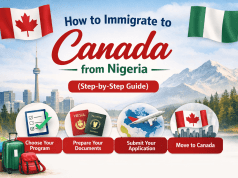
Getting a Canadian visa doesn’t have to be complicated. Whether you want to visit family, work in Toronto, study in Vancouver, or settle permanently, Canada offers different visa pathways for different purposes. Learn more about how to immigrate to Canada from Nigeria for detailed steps specific to Nigerian applicants. This guide walks you through the main visa types available in 2026, what you need to qualify, how much it costs, and how long it takes.
Quick navigation: See our [Canada Visa FAQ] for quick answers to common questions, or [compare all visa types side-by-side] in our Comparison Chart.
The Canadian government processes visas through Immigration, Refugees and Citizenship Canada (IRCC). They issue temporary visas for short-term stays and permanent resident status for people planning to settle long-term. The process you follow depends entirely on why you’re coming and how long you plan to stay.
Understanding Canadian Visa 2026: The Basics
A Canadian visa is official permission from the government allowing you to enter and stay in Canada. Think of it as a stamp or electronic record showing immigration officers that you’ve been approved to come.
Here’s what matters: having a visa doesn’t automatically mean you’ll get into Canada. When you arrive at the border, an officer will ask you questions and check your documents. They have the final say on whether you can enter. This is why you need to be honest in your application and at the border.
Canada groups visas into two main categories:
Temporary visas let you stay for a specific period. You must leave when your permission expires. These include visitor visas, work permits, and study permits.
Permanent resident visas let you live and work in Canada indefinitely. After living as a permanent resident for three years, you can apply for citizenship.
Some countries don’t need a visa for short visits. Instead, citizens from these countries apply for an Electronic Travel Authorization (eTA), which costs CAD $7 and is valid for up to five years. As of November 2025, Qatar joined the list of countries whose citizens can use an eTA instead of a visitor visa.
Visitor Visa (Temporary Resident Visa)
A visitor visa, officially called a Temporary Resident Visa or TRV, lets you enter Canada for tourism, visiting family, or attending business meetings. Most people can stay up to six months, though starting January 2026, border officers can grant stays of up to one year for visitors who show sufficient funds and clear plans to leave.
Want to compare visitor visas with other options? See our [Comparison Chart] to view all visa types side-by-side.
Who Needs a Visitor Visa
Citizens of most countries need a visitor visa to enter Canada. If you’re from a visa-exempt country, you’ll need an eTA instead when flying to Canada. Check the Government of Canada website to see which category applies to your passport.
Eligibility Requirements for Canada Visitor Visa 2026
To get a visitor visa, you must convince an immigration officer that:
- You’ll leave Canada when your visit ends
- You have ties to your home country (job, property, family) that will bring you back
- You have enough money to cover your stay
- You won’t work or study without proper authorization
- You have no criminal record and aren’t a security risk
The amount of money you need depends on your length of stay and whether you’re staying in a hotel or with friends and family.
Canada Visitor Visa Application Process
Applications are submitted online through IRCC’s website. If you need help with the online process, check our guide on how to submit Canadian visa application online.
- Valid passport (should be valid for at least six months beyond your planned departure)
- Completed application forms
- Recent passport-sized photos
- Proof of financial support (bank statements, pay slips)
- Travel itinerary or invitation letter if visiting someone
- Biometrics (fingerprints and photo) at a visa application center
Most applicants need to provide biometrics, which remain valid for 10 years for repeat travel.
Cost and Processing Time
Application fee: CAD $100 per person Family fee: CAD $500 (for families of five or more) Biometrics fee: CAD $85 per person
Processing times vary significantly by country. As of February 2026, visitor visa applications from India take approximately 83 days, while applications from Nigeria take around 85 days. Processing times from inside Canada average 21 days.
Apply at least two to three months before your planned travel date to account for processing delays.
Canada Visa Application Work Permits
A work permit lets you work legally in Canada for a specific employer or, in some cases, for any employer. Most work permits are temporary, typically valid for one to two years, though some can be extended.
Types of Work Permits
Employer-specific work permits tie you to one employer at one location doing one job. If you want to change employers, you need a new work permit.
Open work permits let you work for any employer in Canada. These are available to specific groups, including spouses of skilled workers or students, recent graduates with Post-Graduation Work Permits, and participants in the International Experience Canada program.
Labour Market Impact Assessment (LMIA)
For most employer-specific work permits, your employer must first get an LMIA from Employment and Social Development Canada. This document proves they couldn’t find a Canadian citizen or permanent resident to fill the job.
Some work permits don’t require an LMIA. These include jobs under international agreements (like NAFTA), intra-company transfers, and certain high-skilled positions through the Global Talent Stream.
Eligibility Requirements
Basic requirements include:
- Valid job offer from a Canadian employer
- Proof you’ll leave Canada when your work permit expires
- Enough money to support yourself and return home
- No criminal record
- Pass a medical exam if required
- Documents proving you can do the job (education certificates, work experience letters)
Nigerian applicants should review our detailed guide on how to apply for a Canada work permit from Nigeria for country-specific documentation requirements.
Application Process and Fees
Work permit processing fee: CAD $155 per person Open work permit holder fee: CAD $100 (when applicable) Employer compliance fee: CAD $230 (paid by your employer in most cases)
Work permit processing times from outside Canada average 60 days, while applications from inside Canada can take up to 120 days. Applications from some countries face longer delays.
Canada Visa 2026 Study Permits
If you want to study in Canada for more than six months, you need a study permit. This applies to programs at universities, colleges, and vocational schools.
Major Changes in 2026
Canada introduced significant changes to study permits in 2026. The national cap is set at 408,000 permits, including 155,000 for new students and 253,000 for extensions.
Starting January 1, 2026, master’s and doctoral students at public designated learning institutions no longer need a Provincial Attestation Letter (PAL) or Territorial Attestation Letter (TAL). However, undergraduate and college students still need these letters, and only a limited number are available per province.
Eligibility Requirements
To qualify for a study permit:
- Acceptance letter from a designated learning institution (DLI)
- Provincial Attestation Letter (PAL) or Quebec Acceptance Certificate (CAQ) for most programs
- Proof of financial support covering tuition and living expenses
- Clean criminal record
- Pass a medical exam if required
- Convince officials you’ll leave Canada after your studies
- Language test results showing you can succeed in your program
For Nigeria-specific requirements and document preparation tips, see our complete Nigerian student visa guide for 2025
Cost and Processing Time
Study permit fee: CAD $150 per person Biometrics fee: CAD $85 per person
Study permit processing times remain relatively stable at around four weeks for applications from India and seven weeks for applications from the United States. However, securing a PAL can add weeks or months to the process depending on your province and institution.
To help fund your studies, explore available Canada scholarships for African students.
Many scholarships can cover tuition and living expenses.
Work While Studying
Study permit holders can work up to 20 hours per week during academic sessions and full-time during scheduled breaks without a separate work permit.
Post-Graduation Work Permit
After graduation, you may qualify for a Post-Graduation Work Permit (PGWP) lasting up to three years. This open work permit lets you gain Canadian work experience, which significantly helps if you want to apply for permanent residence later. Not all programs qualify for PGWP, so check your institution’s eligibility before enrolling.
Express Entry and Permanent Residence
Express Entry isn’t a visa program itself. It’s a system Canada uses to select skilled workers for permanent residence. Think of it as an online pool where candidates create profiles, and the government regularly invites the highest-ranking candidates to apply for permanent residence.
How Express Entry Works
Express Entry manages three programs:
Federal Skilled Worker Program – for skilled workers with foreign work experience Federal Skilled Trades Program – for qualified tradespeople Canadian Experience Class – for people with Canadian work experience
To enter the Express Entry pool, you create an online profile and receive a Comprehensive Ranking System (CRS) score based on factors like:
- Age (younger applicants score higher)
- Education level
- Language ability in English or French
- Work experience
- Canadian work experience or education
- Having a valid job offer
- Provincial nomination
In 2026, Express Entry draws have become more targeted. Category-based draws focus on French speakers, healthcare workers, and candidates with provincial nominations. Recent draws have shown CRS cutoffs ranging from 400 for French-language proficiency draws to over 740 for Provincial Nominee Program draws.
If you’re specifically immigrating from Nigeria, our step-by-step immigration guide provides additional context on preparing your application from Nigeria.
Recent Draw Trends
Canadian Experience Class draws in early 2026 have seen CRS scores as low as 511, with one draw issuing 8,000 invitations—one of the largest in history. French-language proficiency draws have had cutoffs below 400.
If you receive an Invitation to Apply (ITA), you have 60 days to submit a complete permanent residence application with all supporting documents.
Application Fees
Express Entry processing fee: CAD $850 per adult, CAD $230 per child Right of Permanent Residence Fee: CAD $575 per adult (refundable if your application is refused) Biometrics: CAD $85 per person
Processing times for Canadian Experience Class applications currently average seven months, while Federal Skilled Worker applications also take seven months.
Provincial Nominee Programs (PNPs)
Every Canadian province except Nunavut and Quebec operates its own Provincial Nominee Program. These programs let provinces select immigrants who meet their specific labor market needs.
Why PNPs Matter
A provincial nomination adds 600 points to your CRS score, virtually guaranteeing you’ll receive an invitation to apply for permanent residence. This makes PNPs the most powerful tool for candidates with lower CRS scores.
How PNPs Work
Each province runs multiple “streams” targeting different types of candidates. Common streams include:
- Skilled workers with job offers
- International graduates from local institutions
- Workers in specific occupations (healthcare, trades, tech)
- Entrepreneurs and investors
Some PNP streams align with Express Entry (“enhanced streams”), while others operate independently (“base streams”). Enhanced streams are faster because they benefit from both the provincial nomination and Express Entry processing.
Application Process
First, research which provinces have programs matching your skills and experience. Most provinces now use an Expression of Interest system where you submit your information online, and the province invites promising candidates to apply.
If you’re nominated, you can either add your nomination to your Express Entry profile (for enhanced streams) or apply directly to IRCC for permanent residence (for base streams).
Provincial nomination processing: 2-6 months depending on the province and stream Federal processing after nomination: 6-8 months for Express Entry-aligned applications
Popular PNP programs include Ontario Immigrant Nominee Program (OINP), British Columbia Provincial Nominee Program (BC PNP), Alberta Advantage Immigration Program (AAIP), and Saskatchewan Immigrant Nominee Program (SINP).
Family Sponsorship Canada Visa 2026
Canadian citizens and permanent residents can sponsor certain family members to immigrate to Canada permanently.
Who You Can Sponsor
- Spouse or common-law partner
- Dependent children under 22 years old
- Parents and grandparents (when the program is open)
- Certain other relatives in specific circumstances
Spousal Sponsorship
This is the most common type of family sponsorship. You can sponsor your spouse or partner whether they live inside or outside Canada.
Key requirements for sponsors:
- Be at least 18 years old
- Be a Canadian citizen or permanent resident
- Prove you can financially support your sponsored person
- Sign an undertaking promising to support them financially
Key requirements for sponsored persons:
- Have a genuine relationship with the sponsor
- Pass medical and criminal checks
- Prove the relationship is real, not just for immigration purposes
Processing time: 15-21 months for spousal sponsorship applications processed outside Quebec, and 35 months for applications in Quebec
Application fees:
- Sponsorship fee: CAD $85
- Principal applicant processing fee: CAD $490
- Right of Permanent Residence Fee: CAD $575
Parents and Grandparents Program
This program operates on a lottery system because demand far exceeds available spots. When open, potential sponsors submit an interest form, and IRCC randomly selects people to apply.
Alternatively, you can apply for a Super Visa for your parents or grandparents. This lets them visit Canada for up to two years at a time without needing to extend their stay. Super visa processing times vary significantly by country, with applications from India taking approximately 213 days.
Business and Entrepreneur Visas
Canada offers several pathways for business people, investors, and entrepreneurs.
Start-Up Visa Program
This program targets entrepreneurs with innovative business ideas who can create jobs for Canadians. You need:
- A qualifying business idea
- A letter of support from a designated organization (venture capital fund, angel investor group, or business incubator)
- Sufficient funds to settle in Canada
- Language proficiency (CLB 5 in English or French)
The program currently faces significant processing delays. Start-Up Visa applications are showing processing times of more than 10 years, indicating severe backlogs.
Self-Employed Persons Program
This targets people with experience in cultural activities, athletics, or farm management who will be self-employed in Canada. The program assesses candidates on experience, education, age, language ability, and adaptability.
Like the Start-Up Visa, this program faces extended delays exceeding 10 years.
Provincial Business Programs
Several provinces offer entrepreneur streams through their PNPs. These typically require you to invest a certain amount in a business, create jobs, and actively manage the business in the province. Requirements vary significantly between provinces.
Working Holiday Visa (International Experience Canada)
The International Experience Canada (IEC) program offers young people aged 18-35 from eligible countries the chance to work and travel in Canada.
Three Program Categories
Working Holiday – lets you work for any employer to fund your travel Young Professionals – requires a job offer related to your field of study International Co-op – for students completing work placements as part of their degree
Eligibility and Process
- Must be 18-35 years old (varies by country)
- Citizen of a participating country
- Valid passport
- Return ticket or proof of funds to buy one
- Health insurance for your stay
The program operates on a quota system. You create a profile online, and if selected from the pool, you’ll have 10 days to accept the invitation and 20 days to submit your complete application.
The IEC work permit processing fee increased to CAD $172 as of December 2025.
Canada visa 2026 Application Process: Step-by-Step
No matter which visa you’re applying for, the general process follows these steps:
Before starting, you may want to complete an immigration assessment to check your eligibility for different visa programs.
Step 1: Determine Eligibility
Use the IRCC website’s questionnaire tool to see which programs you qualify for. Be honest about your circumstances. Misrepresentation can result in a five-year ban from Canada.
Step 2: Gather Documents
Common documents include:
- Valid passport
- Passport-sized photos meeting specific requirements
- Proof of financial support
- Educational credentials
- Work experience letters
- Language test results (IELTS, CELPIP, or TEF for French)
- Police certificates
- Medical exam results
Get documents translated by certified translators if they’re not in English or French.
Step 3: Create Your Online Account
Most applications are submitted online through IRCC’s website. Create an account and start your application. The system will tell you exactly which forms and documents you need.
Step 4: Pay Fees
Pay application fees online using a credit card or debit card. Keep the receipt—you’ll need to upload it with your application.
Step 5: Submit Biometrics
After submitting your application, you’ll receive instructions to give your biometrics at a visa application center. Book your appointment as soon as possible. Your application won’t be processed until you complete this step.
Step 6: Wait for Processing
Check your online account regularly for updates. IRCC may request additional documents during processing. Respond quickly to avoid delays.
Step 7: Receive Decision
If approved, you’ll receive instructions on how to send your passport for visa stamping (if applying from outside Canada) or how to download your electronic document (for some visa types).
Common Reasons for Visa Refusal
Understanding why applications get refused helps you avoid mistakes:
Insufficient ties to home country – You haven’t convinced the officer you’ll leave Canada when required. Strengthen your application with property ownership documents, employment letters, and family ties.
Incomplete documentation – Missing documents or unclear photocopies. Double-check the document checklist and provide everything requested.
Inadequate financial proof – Your bank statements don’t show enough funds or consistent income. Provide at least six months of bank statements showing stable finances.
Misrepresentation – Lying on your application or providing false documents. This results in an automatic five-year ban. Always be truthful.
Criminal inadmissibility – Even minor criminal convictions can make you inadmissible. You may need to apply for criminal rehabilitation before applying for a visa.
Medical inadmissibility – Certain health conditions that could endanger public health or cause excessive demand on healthcare services can result in refusal.
If your application is refused, the refusal letter will explain why. You can reapply, but you need to address the reasons for refusal in your new application.
For more detailed information on various application processes, visit our visa applications process category.
Tips for a Successful Canada Visa 2026 Application
Apply early. Don’t wait until the last minute. Processing times are estimates, and delays happen. Apply at least three to six months before you need to travel.
Be thorough and accurate. Fill out every field on your forms. Double-check names, dates, and addresses. Mistakes can cause delays or refusals.
Provide strong financial evidence. Show at least six months of bank statements with consistent balances. Sudden large deposits look suspicious. Official bank letters on letterhead are more credible than screenshots.
Write a clear explanation letter. For visitor visas, explain your travel plans, why you’re visiting, where you’ll stay, and why you’ll return home. For permanent residence applications, explain any gaps in employment or education.
Get certified translations. Don’t use Google Translate for official documents. Use certified translators recognized by IRCC.
Keep copies of everything. Save copies of all documents you submit. You’ll need them if IRCC requests additional information.
Don’t use consultants you can’t verify. Only use immigration representatives registered with the College of Immigration and Citizenship Consultants or licensed immigration lawyers. Check their credentials on the official regulator’s website.
Stay updated. Immigration rules change frequently. Check the IRCC website for current requirements before applying.
Checking Your Application Status
After you apply, you can track your application progress through your online account on the IRCC website. Status updates typically include:
- Application received
- Biometrics completed
- Medical exam passed (if required)
- Background check in progress
- Decision made
Don’t call IRCC to ask about your application status if it’s within the normal processing time. This won’t speed up your application.
If your processing time exceeds the published estimate by more than a few weeks, you can submit a case-specific enquiry through the IRCC web form.
After Your Visa is Approved
Getting your visa approved is exciting, but there are still steps to follow:
For temporary visas (visitor, work, study):
- Your passport will be returned with a visa stamp or you’ll receive an electronic authorization
- Keep your approval letter with you when you travel
- Arrive prepared to answer questions at the border
- Bring all supporting documents with you to Canada
For permanent residence:
- Complete your landing process at a port of entry or at an IRCC office if you’re already in Canada
- Receive your Confirmation of Permanent Residence document
- Apply for your Permanent Resident Card (it arrives by mail in 4-6 weeks)
- Get your Social Insurance Number
- Apply for provincial health insurance
Maintaining Your Status
Once in Canada, you must maintain your legal status:
Visitor status:
- Don’t work or study without authorization
- Leave before your authorized stay expires
- Apply for an extension at least 30 days before expiry if you need more time
Work permit:
- Only work for your designated employer (if employer-specific)
- Stay in your authorized occupation and location
- Apply for a new permit if you want to change employers
- Keep your employer compliance current
Study permit:
- Remain enrolled at your designated learning institution
- Make progress toward completing your program
- Maintain full-time enrollment (unless part-time is allowed)
- Apply for a new permit if you change schools
Permanent residence:
- Live in Canada for at least 730 days in every five-year period
- Pay taxes and follow Canadian laws
- Renew your PR card before it expires
- Don’t commit serious crimes that could cost you your status
Pathways to Citizenship
After living in Canada as a permanent resident for three years (1,095 days) out of the previous five years, you can apply for Canadian citizenship. This requires:
- Physical presence in Canada for the required time
- Filing Canadian income taxes
- Passing a citizenship test on Canadian history, values, and government
- Demonstrating language ability in English or French
Citizenship processing currently averages 13 months.
Frequently Asked Questions
Can I apply for multiple visa types at the same time? Generally, you should apply for the visa type that best matches your purpose for coming to Canada. Applying for multiple visas simultaneously can cause confusion and delays.
What happens if my visa expires while I’m in Canada? You have 90 days to either leave Canada or apply to restore your status. If you don’t take action within 90 days, you must leave Canada and apply from outside the country.
Can I change from a visitor visa to a work permit without leaving Canada? In most cases, no. The temporary policy that allowed this ended in August 2024. You typically need to leave Canada and apply from outside.
Do I need a lawyer to apply? No, you can complete the application yourself. However, if your case is complex, consulting a licensed immigration lawyer or consultant can help.
How do I prove my relationship is genuine for spousal sponsorship? Provide evidence like photos together, communication records, joint financial documents, wedding certificates, and letters from family and friends who know your relationship.
Can I visit Canada while my permanent residence application is processing? Yes, if you have a valid visitor visa or eTA. However, you must convince border officers that you’ll leave Canada if your PR application is refused.
Important Reminders
Immigration to Canada requires patience, careful preparation, and honesty. Here are the most important things to remember:
The system prioritizes people who can contribute to Canada economically or who have family connections. Younger applicants with strong language skills, higher education, and Canadian experience have better chances in competitive programs.
Processing times are estimates, not guarantees. Your application might take longer if it requires additional security checks or if you’re from a country with high application volumes.
Never pay someone who guarantees you a visa or job in Canada. These are scams. No one can guarantee immigration outcomes.
Immigration fraud is common. Protect yourself by only using registered representatives, never paying for jobs, and verifying all communications claiming to be from IRCC.
The information in this guide is current as of February 2026, but immigration policies change regularly. Always verify requirements on the official Government of Canada website (canada.ca) before applying.
Related Resources:
– Fully funded scholarships in Canada for African students
– Canada scholarships for Nigerian students with low CGPA
– Latest visa and immigration updates for Nigerian students
Next Steps
Ready to apply? Here’s what to do:
- Visit canada.ca/immigration and use the eligibility tool to identify your best pathway
- [Compare all visa types side-by-side] in our Comparison Chart to understand requirements and timelines
- Read the complete instruction guide for your visa type on the IRCC website
- Check our [Canada Visa FAQ] for answers to common questions
- Start gathering your documents well in advance
- Create your online account and begin your application
- Track your application and respond promptly to any requests for additional information
Whether you’re planning a short visit or hoping to build a new life in Canada, understanding the visa process is your first step. Take your time, prepare thoroughly, and apply when you’re ready. Good luck with your application.
Last updated: February 2026
Related topics: Express Entry latest draws, Provincial Nominee Programs by province, Study permit changes 2026, Canadian immigration levels plan 2026-2028
Official resources:
- Government of Canada immigration: canada.ca/immigration
- Check processing times: ircc.canada.ca/english/information/times
- Find designated learning institutions: canada.ca/dli-list
- Verify immigration representatives: college-ic.ca
Discover more from African Base
Subscribe to get the latest posts sent to your email.