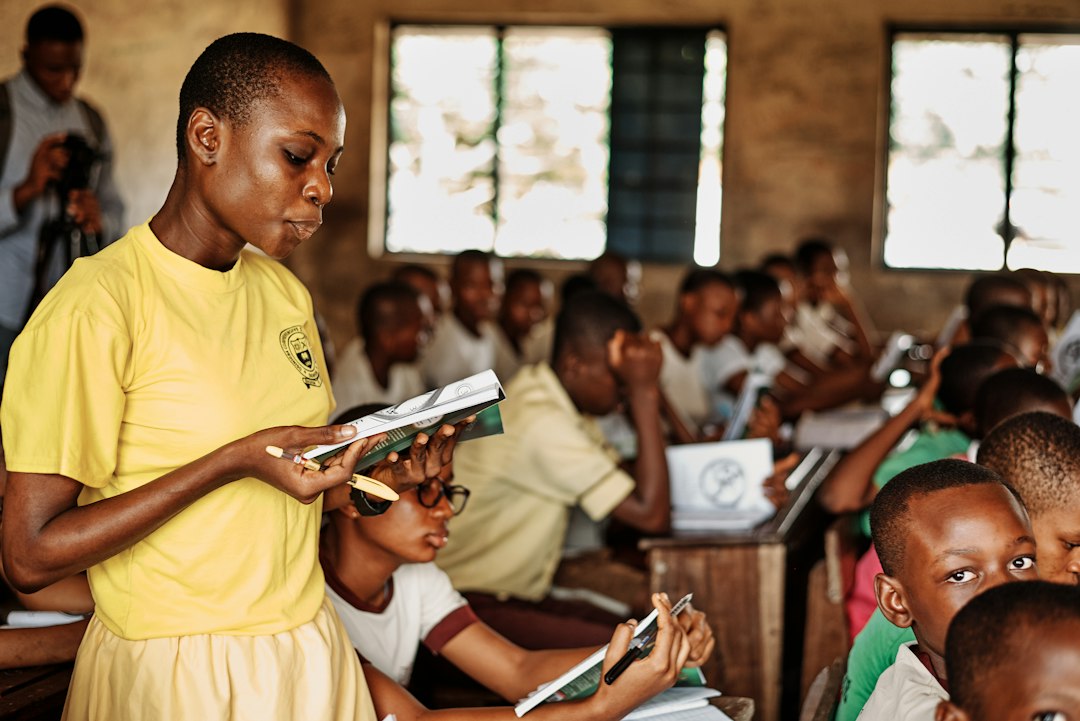
Choosing a secondary school can be one of the biggest educational decisions a parent makes for a child. There are school fees to consider, examination results to compare, locations to think about and, of course, the child’s individual needs and preferences.
With so many factors to consider, it is easy to focus heavily on grades. After all, parents want their children to perform well academically and have good opportunities after secondary school.
But examination results tell only part of the story.
A child will spend several important years in secondary school. During that time, they are not only learning subjects for examinations. They are also developing confidence, habits, friendships, values and skills that can affect them long after they leave school.
So, beyond good grades, what should parents look for when choosing a secondary school?
Here are seven important factors to consider.
1. The Quality of Teaching
A school may have impressive examination results, but parents should also try to understand how students are being helped to achieve those results.
When visiting a school, ask questions about the teachers. Are they qualified and experienced? How does the school support teachers in improving their skills? What happens when a student does not understand a topic?
Good teaching is not simply about covering the syllabus. Students need teachers who can explain difficult ideas clearly, encourage questions and recognise when a child needs additional help.
Parents should also find out whether teachers are approachable. A child who is afraid to ask questions may continue struggling with a subject without anyone realising it.
Useful questions include:
- How are students who are struggling identified?
- What support is available when a child falls behind?
- How are parents informed about academic difficulties?
- Are students encouraged to ask questions and participate in lessons?
The goal is not simply to find a school where students get good grades. It is to find one where children are actually being helped to understand what they learn.
2. Character Development
Academic success is important, but parents should also think about the kind of person their child is becoming.
Secondary school is a period when young people develop attitudes towards responsibility, honesty, discipline and relationships with others. Their school environment can influence these habits significantly.
Parents should therefore pay attention to the values a school promotes.
How does the school handle bullying? What happens when a student is dishonest or disrespectful? Are students encouraged to take responsibility for their actions? Are good behaviour and effort recognised, or is attention given only to academic performance?
Discipline is necessary in a school, but it should not be limited to punishment. Children also need to understand why certain behaviours are unacceptable and how to make better choices.
A useful question for parents to ask is: “What kind of person is my child likely to become in this environment?”
The answer may tell you as much about a school as its examination results.
3. A Safe and Supportive Environment
Children need an environment where they can learn without violence, bullying or intimidation. Nigeria’s Federal Ministry of Education and UNICEF school-safety guidance emphasises the importance of safe, supportive learning environments and effective communication between schools and families.
Parents should try to assess this rather than simply assume that every school provides the same level of support.
During a school visit, observe how teachers speak to students. Do students appear comfortable approaching their teachers? Are they afraid to make mistakes, or are they encouraged to learn from them?
It is also worth asking what systems the school has for dealing with bullying, conflicts and other safety concerns.
Parents can ask whether the school has a clear bullying or safeguarding policy, who students can approach when they have a problem, and how parents are informed when serious incidents occur.
A supportive school does not mean a school without rules. Children need structure and clear expectations. However, there should also be room for communication, guidance and appropriate support.
Parents should look for an environment where students are expected to work hard and behave responsibly but also know where to seek help when they need it.
4. Support for Children Who Learn Differently
Not every child learns at the same pace or in exactly the same way.
One student may understand a new mathematical concept quickly, while another may need several explanations and more time to practise. Some children are naturally confident in class, while others may need encouragement before speaking up.
Parents should therefore ask how a school responds when a child struggles.
Does the teacher provide additional explanations? Are students given opportunities to practise? Are parents informed when difficulties continue? Is the child encouraged to improve rather than quickly being labelled as “dull” or “lazy”?
Academic struggles do not necessarily mean that a child lacks ability. Sometimes a student needs a different explanation, additional practice or more targeted support.
Parents can also play a role at home by creating a calm and consistent learning routine. For example, if a child finds mathematics difficult, practical strategies for helping a child improve their mathematics skills at home can complement what the child is learning at school.
The important thing is for the school and family to work together rather than waiting until a child’s difficulties become overwhelming.
5. Practical and Digital Learning Opportunities
Students need more than the ability to remember information for an examination.
As they grow older, they will need to communicate clearly, solve problems, work with others, use technology and adapt to unfamiliar situations. These abilities are difficult to develop through memorisation alone.
Parents should therefore ask what opportunities students have to apply what they learn.
Are there practical activities? Do students use computers and other technology as part of learning? Are there science experiments, creative activities, clubs, competitions, sports or other programmes that allow children to explore their interests?
Digital learning is also worth considering. Students should gradually become comfortable using appropriate digital tools for learning, research, communication and problem-solving.
This does not mean every lesson needs to involve a computer. Rather, parents should look for a school that recognises the importance of combining academic knowledge with practical competence. AfricanBase’s article on measuring real AI and digital skills beyond certificates explains why the ability to apply skills in unfamiliar situations matters.
6. Communication Between Parents and the School
Parents should not have to wait until there is a serious problem before hearing from a school.
Good communication between parents and teachers can help both sides recognise difficulties earlier and provide more consistent support for a child.
Before choosing a school, ask how parents are kept informed.
Are there regular opportunities to discuss academic progress? How are concerns communicated? Can parents easily reach the appropriate teacher or school representative when they have questions?
Communication should also go beyond complaints and poor results. Parents should hear about their child’s progress, achievements and areas where additional support at home may be useful.
A healthy relationship between parents and a school should function as a partnership. Parents and educators have different responsibilities, but both are working towards the child’s development.
7. Preparation for Life After Secondary School
Finally, parents should look beyond the next examination.
Passing examinations is important, but secondary school should also help students develop the confidence and skills they will need after graduation.
Parents can ask how a school encourages leadership, independence, communication and decision-making.
Are students given opportunities to take responsibility? Are they encouraged to discover their interests and strengths? Does the school provide opportunities to explore higher education, vocational training and possible career paths?
A student may eventually attend university, pursue vocational training, start a business or choose another path. Whatever direction they take, they will need more than examination certificates.
They will need to communicate, solve problems, work with different people, make decisions and continue learning.
Students approaching higher education should also learn to connect education with their longer-term goals. AfricanBase’s guide to choosing a career path before choosing a study destination explores this issue in more detail.
A school that keeps these considerations in mind is helping students prepare not just for their next examination but also for the years that follow.
Look at the Whole Picture
Choosing a secondary school should not be based on one impressive feature.
A school’s examination results are useful. So are its facilities, location, fees and recommendations from other parents. But these should form part of a bigger picture.
If possible, visit the schools you are considering. Ask questions. Speak with teachers or administrators. Observe the students and the general atmosphere. Find out how the school handles academic difficulties, discipline, safety and communication with parents.
Most importantly, think about your own child.
A school that works well for one child may not necessarily be the right fit for another. Consider your child’s personality, strengths, interests, learning needs and areas where additional support may be required.
The right school should provide an environment where a child can work towards strong academic results while also developing confidence, character, practical skills and a sense of responsibility.
Good grades matter. But when choosing a secondary school, parents should also ask what comes beyond the grades.
About the Author
Faith Linus is a digital marketing and content specialist focused on creating useful, parent-centred educational content. She works with Shorelands British Academy to develop educational resources and strengthen its digital presence.
Website: Shorelands British Academy