Reviewed: 27 September 2026. Searching for scholarships as a Nigerian student can produce a long list of attractive names. The useful question is which awards actually fit your degree level, course, citizenship, experience, deadline and budget. This guide gives you a repeatable way to find, verify and rank opportunities before writing applications. It is a planning method, not a list of awards currently open.
Start With a One-Page Applicant Profile
- Degree already completed and exact classification; intended degree level and subject.
- Work, research, volunteering and leadership experience with dates.
- Countries and study modes you can consider, including any professional licensing needs.
- English evidence, passport status and the date final transcripts or references will be ready.
- Maximum amount you can pay upfront for tests, admission fees, travel or costs an award excludes.
Use this profile to screen a scheme before investing in essays. If the award requires two years of post-degree work and you graduated recently, mark it “later” rather than trying to explain away the rule. Chevening, for example, has specific work-experience and return-home conditions; check its official eligibility page for the current cycle.
Find Opportunities From the Source
Search official scholarship, university and government pages using your subject and degree level. Record the provider’s exact programme name and primary URL. A blog article can help you discover an opportunity, but the official call controls eligibility and deadlines. AfricanBase’s fully funded scholarships for Nigerian students roundup and scholarships for African students guide are starting points for exploration.
Check the route, not just the brand. “Commonwealth” can refer to different awards with distinct hosts, nomination steps and deadlines. The UK Commonwealth Master’s route uses a nominating agency, while Commonwealth Shared Scholarships involve participating universities. Read AfricanBase’s Commonwealth guide and our Commonwealth Shared Scholarship guide for Nigerians, then confirm the live rules on the provider site.
Verify Seven Things Before You Shortlist
- Eligibility: is Nigeria included for this route, and do your age, degree, subject and experience meet its exact rules?
- Course: is your intended programme on the approved list, at the right university and campus?
- Funding: which tuition, living, travel, insurance and research costs are covered? What is conditional?
- Application route: is there a scholarship portal, university application, nomination, supervisor or interview stage?
- Timing: is the call open, closed, expected or unannounced? Record the provider’s time zone.
- Documents: can you get final records, translations, references or a test result by the relevant stage?
- Authenticity: does the link lead to the provider’s own website or official portal, with no unexplained payment request?
Do not mark a scheme “open” because a search snippet still shows a previous cycle. Save the official page and the date you checked it. Chevening says its application is free and does not endorse paid third-party application support; the Commonwealth Scholarship Commission likewise directs applicants to official systems. Use the same verification habit with every opportunity.
Build a Shortlist That Drives Decisions
| Column | What to record | Why it matters |
|---|---|---|
| Programme and source | Exact title and official URL | Prevents mixing similar awards |
| Fit | Eligible, uncertain or ineligible, with the exact rule | Stops wasted applications |
| Funding gap | Costs not clearly covered | Tests affordability |
| Dates | Opening, portal deadline, nomination and admission deadlines | Captures separate processes |
| Evidence | Missing transcript, reference, test or proposal | Shows what to prepare first |
| Next action | One specific task and review date | Keeps the list current |
Give each award one of three statuses: apply now if the call is live and you meet the rules; prepare if a future cycle is plausible but unannounced; remove if a firm eligibility rule excludes you. “Uncertain” needs a question to the official provider, not a guessed answer. Keep five well-matched opportunities ahead of fifty copied links.
For the timing layer, use AfricanBase’s scholarship application calendar for African students to see how major application windows overlap, but always let the individual provider page control the final deadline.
Prioritise Without Chasing Prestige Alone
First eliminate ineligible options. Then compare the remaining awards on course fit, funding gap, effort to prepare, and time left. A university award with a clear eligibility route and partial tuition coverage may be more realistic for one student than a famous full award with an impossible experience rule. Conversely, a partial award is not useful if the uncovered amount remains unaffordable. AfricanBase explains the trade-off in its fully funded versus partial scholarships guide.
Illustration: Applicant A has a completed bachelor’s degree but limited post-degree work. A programme requiring two years of work goes into “later”; a course-specific university award that accepts recent graduates may be worth investigating now. This is a screening example, not an assertion that any named award is open or guaranteed.
Prepare a Reusable Evidence Pack
- Official degree certificate and transcript, plus a plain list of grades and course titles.
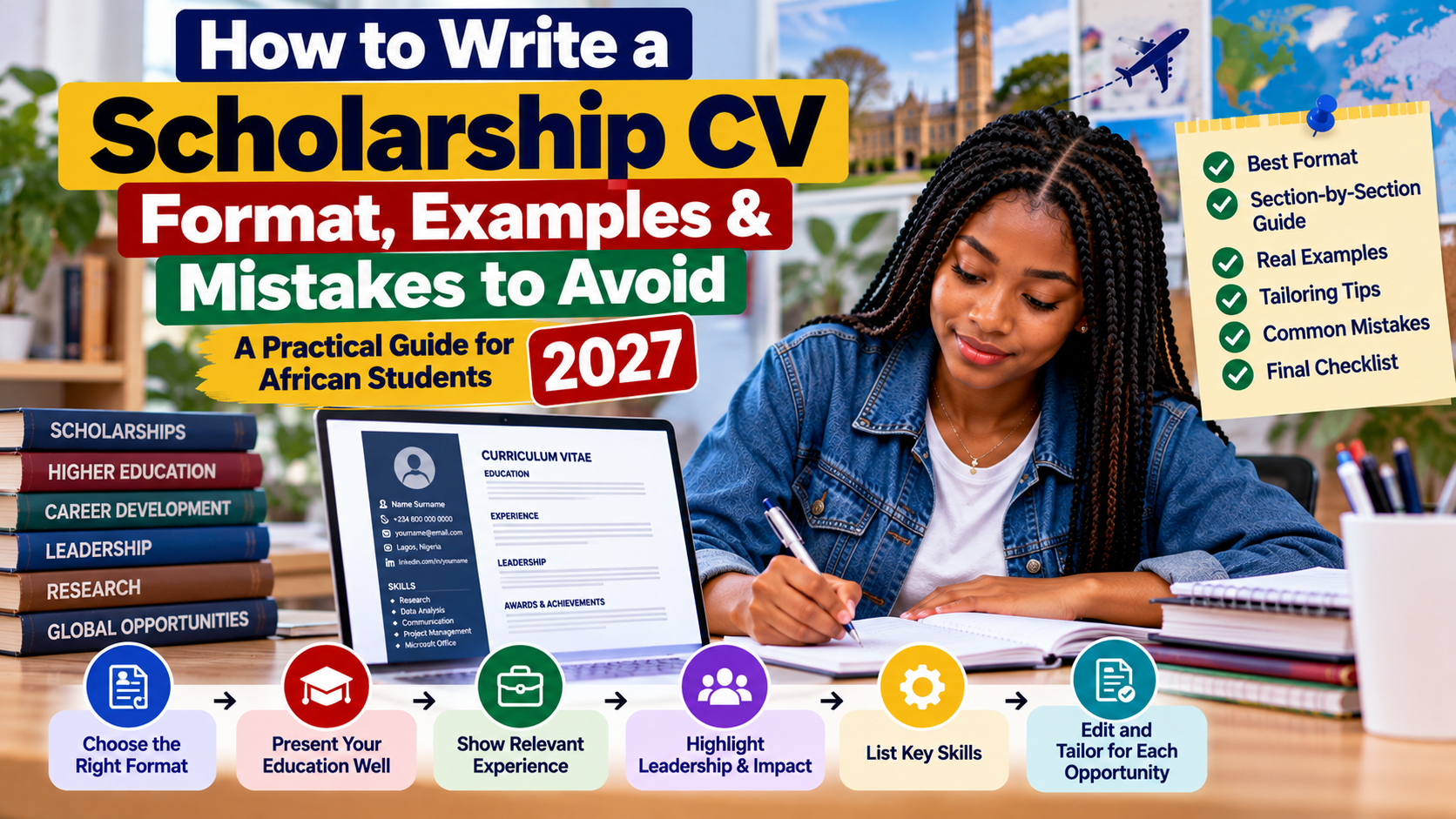
- A dated CV that separates paid work, volunteering, research and leadership.
- Two or three referees who can speak to different aspects of your work; ask before entering their details.
- A short bank of truthful examples: problem, your action, result and lesson.
- A document tracker showing required formats and whether a university application is separate.
Reuse your evidence, not the same essay verbatim. Each provider asks different questions. See AfricanBase’s scholarship essay guide for shaping a specific response and its study-abroad scholarship application guide for the full submission process.
A Weekly Routine That Keeps the List Accurate
Once a week, check official pages for your top “prepare” entries and update the status, host/course list and deadline. In the month before a live deadline, split the work into document requests, referee requests, statement drafts, portal entry and final review. Allow time for Nigerian university transcripts, internet interruptions and a provider’s separate nomination stage. Never assume an old cycle’s date will recur exactly.
A simple weekly review takes less time than rebuilding your shortlist from scratch every month: remove expired links, promote newly opened opportunities into “apply now”, and add one concrete next action beside each active application.
Frequently Asked Questions
How many scholarships should I apply for?
There is no universal target. Start with the opportunities for which you can meet every firm rule and submit a tailored application. Track quality and completion, not only the count.
Should I pay someone to secure an award?
Be cautious of anyone claiming guaranteed selection or demanding payment through a personal account. Check fees and application links on the provider’s own site. Some universities charge admission fees, so distinguish a documented university charge from an unofficial “scholarship processing” demand.
What if the next cycle has not been announced?
Mark it “prepare”, gather documents and set a reminder to check the official page. Do not publish or rely on a predicted deadline as if it were confirmed.